• Carbon Credit Verification
  • Resources
LoginContact us
Login
Contact us

Services

  • Carbon verification
  • Value chains

About

  • About us
  • Careers
  • Contact

Resources

  • News
  • Publications
  • Press
  • Privacy Policy
  • Whistleblower Policy
  • Use of Mark Policy
  • Website Terms of Use
  • Allocation of Responsibility
  • SustainCert Terms and Conditions
  • Impartiality Statement
  • Complaints and Appeals
  • Cookie Policy

Sign up to our newsletter

Follow us

© 2025 SustainCERT. All Rights Reserved.
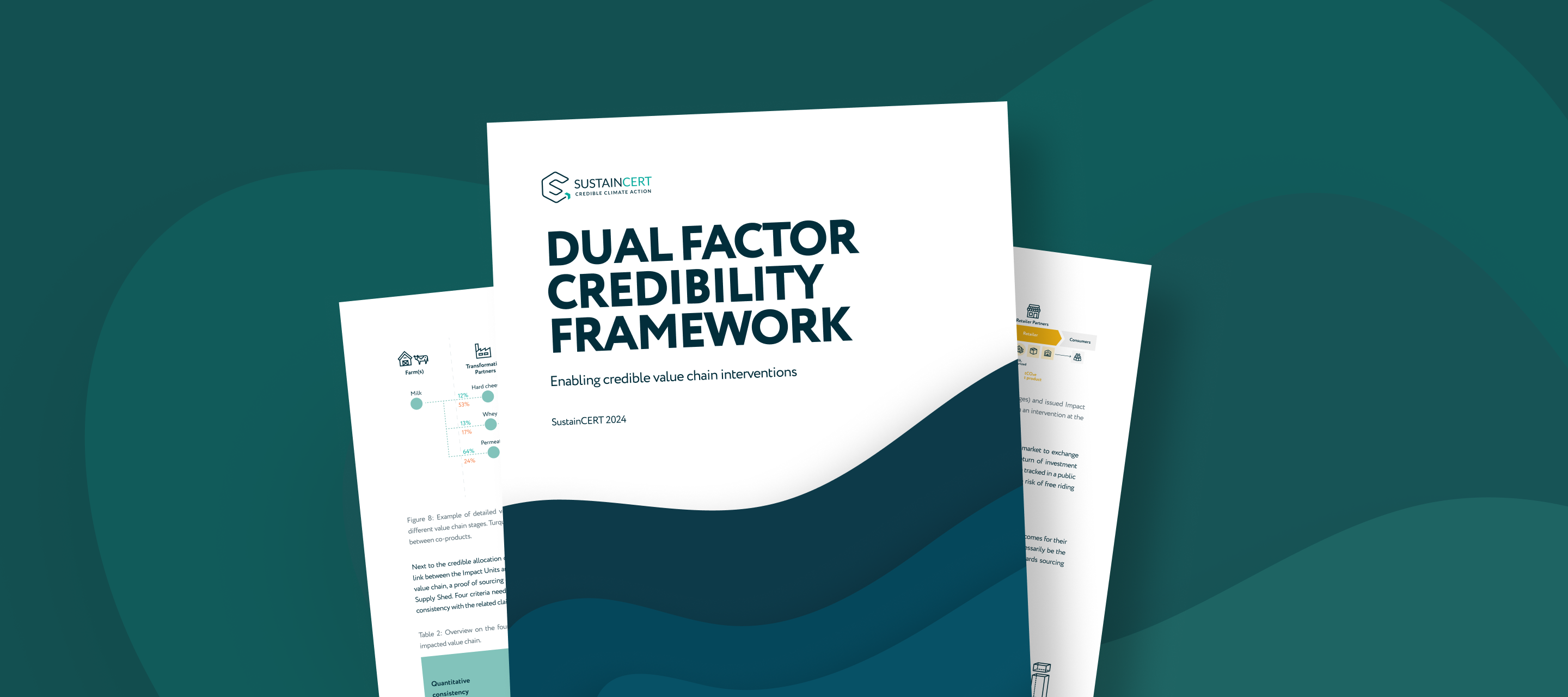
Cover of the 'Dual Factor Credibility Framework' report with abstract blue wave design.
Back to publications

Dual Factor Credibility Framework

A publication from SustainCERT introducing a framework to enable credible value chain interventions by verifying mitigation outcomes and ensuring co-claiming and reporting integrity.

Why download this publication?

Scope 3 emissions account for the majority of most companies’ climate footprint, yet they remain the most complex to reduce and report. Unclear incentives, inconsistent rules, and risks of double counting block credible value chain decarbonization at scale.

The Dual Factor Credibility Framework provides a solution by combining two critical layers of assurance:

  1. Verification of mitigation outcomes through robust quantification, baselines, monitoring, and ownership checks.
  2. Credible co-claiming and reporting via Impact Units, attribution to value chains, proof of sourcing, and integration into Scope 3 inventories.

This publication offers technically rigorous yet practical guidance to help organizations:

  • Ensure verified emission reductions and removals are real, additional, and aligned with recognized methodologies.
  • Unitize and transfer mitigation outcomes as Impact Units, allowing value chain partners to co-claim impacts proportionally.
  • Link interventions to specific goods and supply sheds while avoiding freeriding and double counting.
  • Integrate verified impacts into corporate inventories in line with GHG Protocol and SBTi guidance.
  • Unlock opportunities for collaboration, co-investment, and finance of value chain decarbonization.
Download your copy

Access SustainCERT’s proposed framework to bring credibility, transparency, and scalability to Scope 3 reporting and collaborative climate action.

Access this document

Fields marked with * are mandatory.

Our other reading suggestions
Report cover showing a combine harvester in a wheat field with the title on decarbonizing food and agriculture.

Financing Decarbonization in Food and Agriculture Value Chains

This report explores climate finance, innovative funding, and collaborative strategies to scale action. Learn how businesses can leverage co-investment, market-based solutions, and value chain partnerships for real impact. Decarbonization is a business imperative—download the report to lead the transition.
Read more
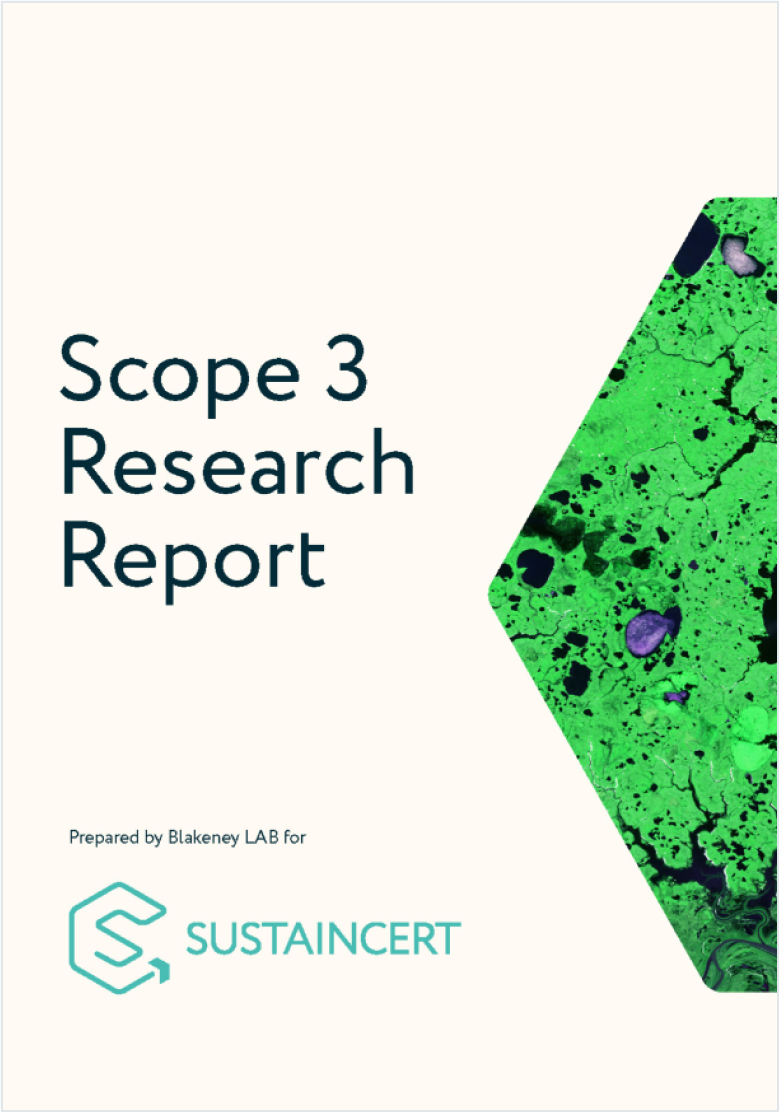
Cover of the "Scope 3 Research Report" with SustainCERT logo and a green abstract pattern on the right side.

Scope 3 Research Report

A publication from SustainCERT presenting findings from a 2023 study of 500 large organizations in the US and Europe on Scope 3 emissions reporting, interventions, and verification.
Read more
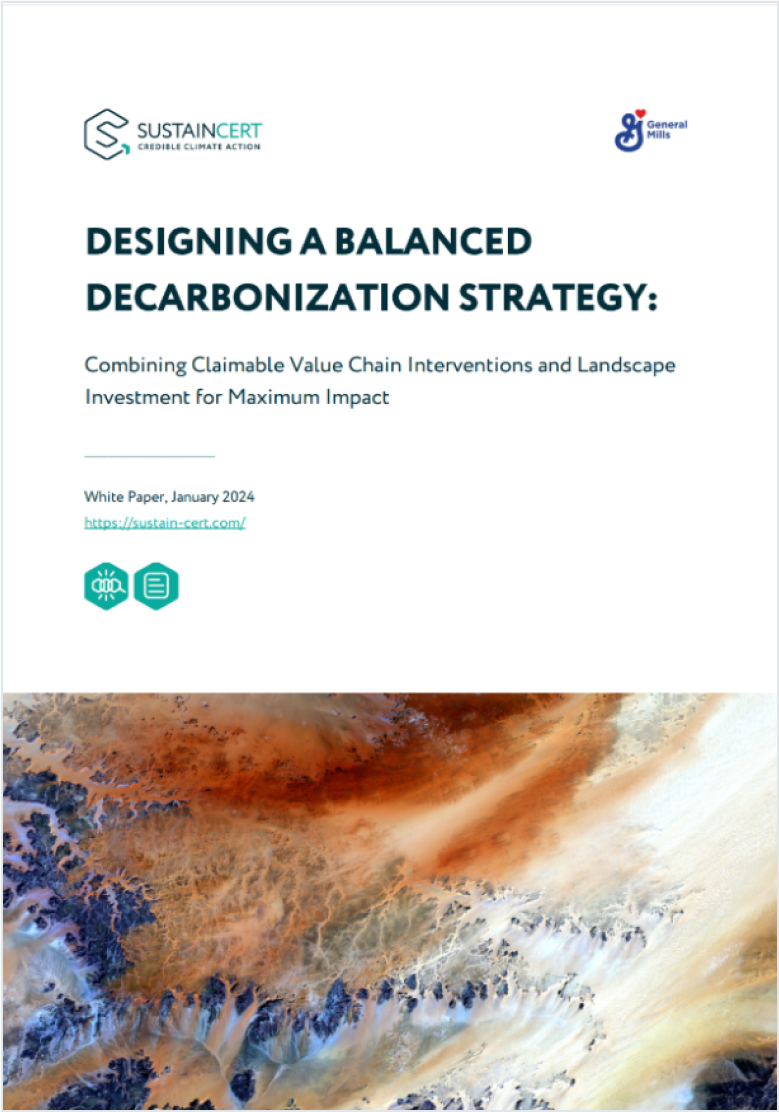
Cover page of a white paper titled

Designing a Balanced Decarbonization Strategy

This white paper from SustainCERT and General Mills explores practical pathways to reduce agricultural Scope 3 emissions by combining claimable value chain interventions with landscape-level investments. Drawing on real-world pilots and the latest GHG accounting guidance, it highlights opportunities, challenges, and solutions for building a balanced approach to net zero.

Read more
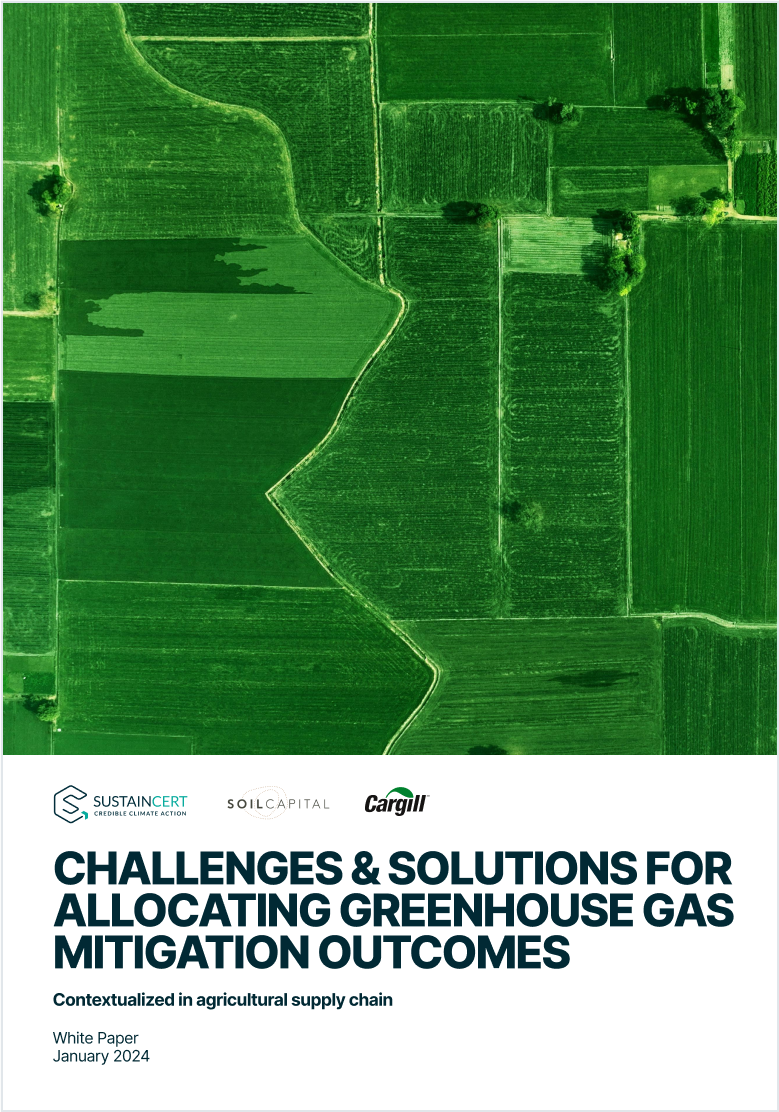
White paper cover on GHG mitigation in agriculture with abstract landscape image.

Allocation Greenhouse Gas Mitigation Outcomes

How can companies credibly allocate greenhouse gas mitigation outcomes in complex agricultural supply chains? This white paper from SustainCERT, Cargill, and Soil Capital explores the technical challenges of co-products, crop rotations, and multi-crop supply sheds — and presents practical solutions to strengthen Scope 3 accounting and avoid double counting.

Read more
Cover of a report titled "Principles'  by SustainCERT and Climate Ledger,

Principles for Best-Practice Digital Verification

How can digital innovation transform the credibility of carbon markets? This white paper from SustainCERT and the Climate Ledger Initiative explores guiding principles and practical blueprints for digital verification, highlighting how technology can improve accuracy, reduce costs, and scale trusted climate impact.

Read more
photo of tall trees viewed from below.

Digital Measurement, Reporting, and Verification

How can digital innovation make carbon markets more credible and scalable? SustainCERT’s Digital MRV Report explores the state of play in digital Monitoring, Reporting, and Verification, highlighting how new tools can cut costs, improve accuracy, and unlock trust in climate action.

Read more